Here's a situation more people than you'd think find themselves in. You have a renovation project. A real one -- not a Pinterest board, not a "someday" idea. You have a budget, a floor plan, and a very specific vision of what you want your space to feel like. So you start looking for an interior designer.
And then the problems start.
The good ones in your area are booked six months out. The ones available now show you a portfolio that doesn't match your aesthetic at all. The ones that do match it quote you a number that makes you question every life decision you've ever made. And somewhere in the middle of all that, you start wondering if there's a better way.
There is.
Remote interior design has quietly become one of the most effective, most personalized, and most underestimated ways to transform a home. Not because it's a compromise. Because it's actually better.
The Local Designer Myth
There's a deeply held assumption that interior design requires physical presence. That your designer needs to walk your space, feel the light at 3pm, touch the walls. And sure, for certain types of projects, proximity matters. But for the vast majority of residential renovations and new builds, that assumption is costing you.
What proximity actually gives you is a limited pool. You're choosing from whoever happens to be within driving distance and available within your timeline. That's not a selection process. That's geography deciding your outcome.
When you open that search up to remote, you're choosing from the best. Full stop.
We've delivered over 550 projects across 30 countries. Apartments in London, full home renovations in Vancouver, kitchen redesigns in Miami, bedroom transformations in Sydney. Not once did a client say "I wish you could have seen the space in person." What they said, consistently, was that they wished they'd found us sooner.
What Remote Interior Design Actually Looks Like
Let's be specific, because "remote interior design" gets used to describe everything from a mood board emailed to you in 48 hours to a fully productized, photorealistic visualization process with direct designer access and structured revision rounds.
Those are not the same thing.
At the high end of remote interior design, here's what the process actually looks like:
You share your floor plan, your inspiration references, and a description of how you want the space to feel. Not just how it should look -- how it should feel. That distinction matters more than most designers will admit to you.
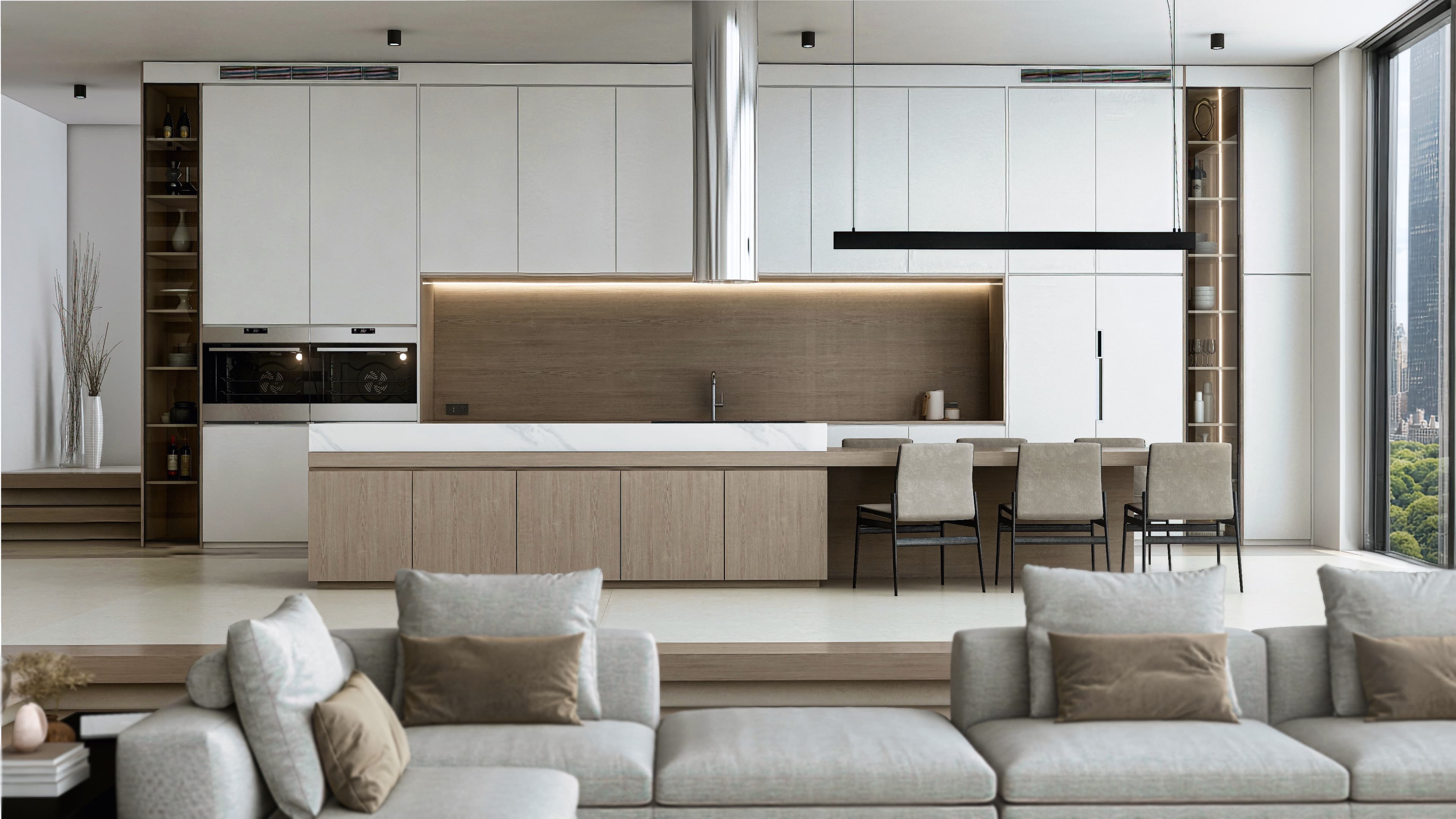
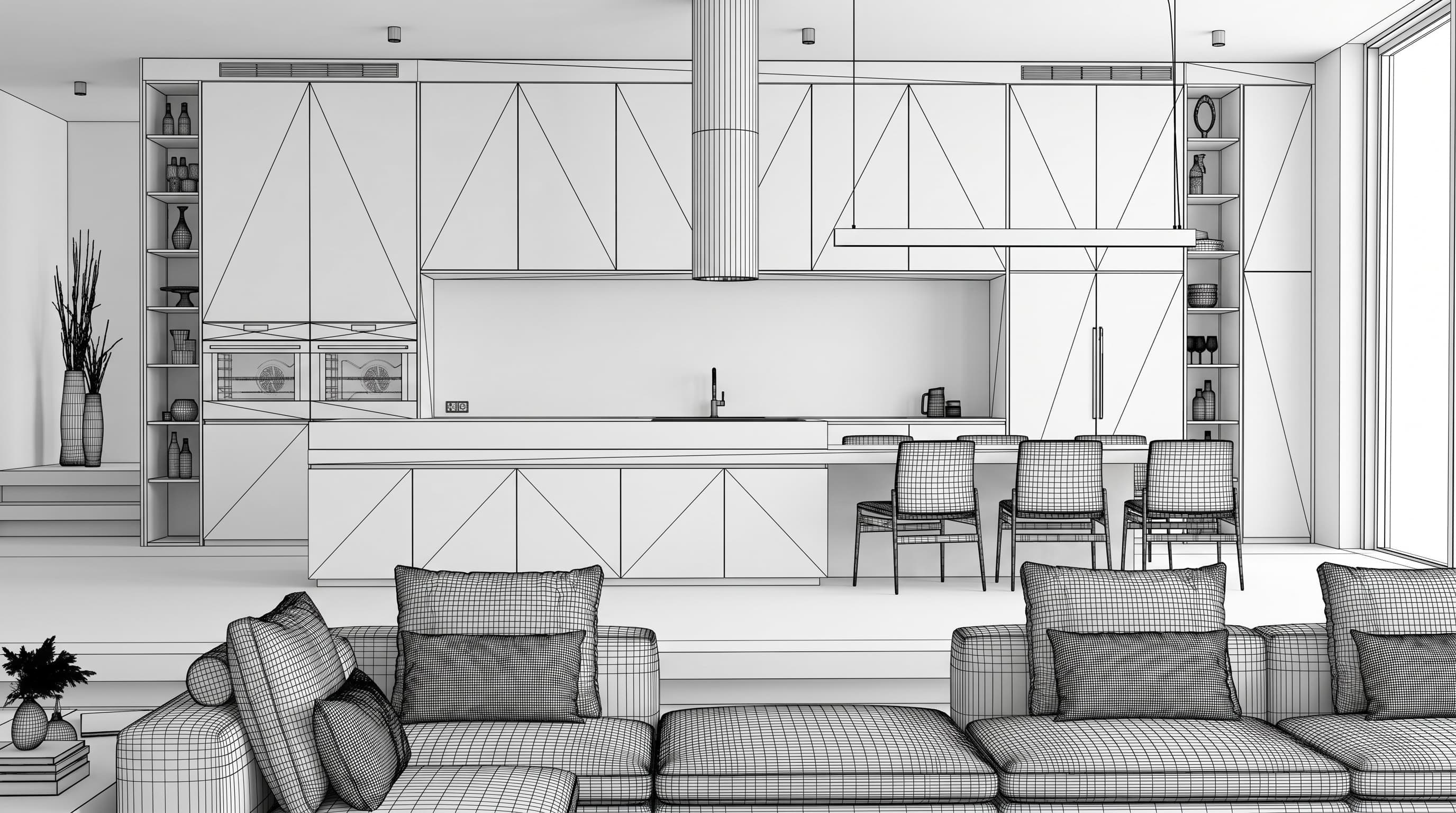
From there, your space gets built in full 3D. Every wall, every material, every piece of furniture placed with spatial accuracy. The lighting gets calibrated. The proportions get tested. Before a single contractor is hired or a single tile is purchased, you see your home. Not a sketch. Not a mood board. A photorealistic render that shows you exactly what you're getting.
That's not a nice-to-have. That's the entire point.
The Cost Conversation Nobody Has Honestly
Local interior designers in major markets charge anywhere from $150 to $500 per hour. A full home project can run $10,000 to $50,000 in design fees alone, before a single material is purchased. And in many cases, you're paying for overhead -- the studio rent, the staff, the showroom they need you to visit three times.
Remote studios don't carry that overhead. Which means the budget goes where it should: into the quality of the work.
This isn't about finding the cheapest option. It's about finding the best value. A remote studio that delivers photorealistic 3D visualization, structured project management, and direct designer communication at a fraction of the cost of a local firm isn't cutting corners. It has simply built a smarter operation.
The result for you is a higher quality deliverable at a price that doesn't require a second mortgage.
Personalization Doesn't Require Proximity
One of the most persistent concerns people have about remote design is personalization. Will they really understand my taste? Will this feel generic?
It's a fair question. And the answer depends entirely on the studio you choose.
The best remote interior design processes are built around understanding you before they touch your space. The brief isn't a form you fill out in two minutes. It's a conversation. It's reference images, it's descriptions of how you live, it's the things you hate as much as the things you love. A designer who asks the right questions remotely will understand your vision better than one who walked through your house once and assumed the rest.
We've worked with clients who sent us three sentences and a floor plan and trusted us completely. We've worked with clients who sent 200 reference images and had an opinion about every single fixture. Both approaches work. The process adapts. That's the point.
The Visualization Advantage
Here's something that doesn't get said enough: seeing your space before it exists changes everything about the decision-making process.
The render is not the end product. The render is the tool that makes the end product right.
When you can look at a photorealistic render of your living room -- your actual living room, with your actual dimensions, your chosen materials, your specific lighting -- you stop guessing. You stop saying "I think this will work." You know. And when something isn't right, you see it immediately. You don't discover it after the tiles are laid.
This is the core advantage of remote architectural visualization over traditional interior design. Local designers often skip this step entirely, or offer it as a premium add-on. For a remote studio built around visualization, it's the foundation of everything.
What to Look For in a Remote Interior Design Studio
Not all remote design services are equal. Here's what actually matters when you're evaluating one:
A real portfolio of completed residential projects. Not renderings of hypothetical spaces -- actual client projects with before and after context. Anyone can make a beautiful image of a room that doesn't exist. The question is whether they can take your specific, imperfect, real-world floor plan and make it exceptional.
Drag to compare
Direct communication with the people doing the work. One of the quiet failures of larger design firms, remote or otherwise, is that the person you meet in the consultation is not the person designing your home. Know who is working on your project. Talk to them.
A structured process with clear milestones. Renovation projects fail most often not because of bad taste but because of unclear expectations. A studio that can tell you exactly what happens at each stage, what you'll receive, and when, is a studio that has done this before.
Photorealistic visualization as a standard, not an upgrade. If 3D rendering is presented as an optional extra, that tells you something about how seriously the studio takes the outcome.
The Geography of Good Design
The best interior designer for your home is probably not in your city. That's not an insult to your city. It's just math. Talent doesn't distribute itself evenly across zip codes.
Remote interior design removes that limitation completely. It means a homeowner in a mid-size American city gets access to the same quality of work as someone in Manhattan or London. It means your renovation doesn't have to settle for whoever happens to be available locally.
Seven years ago, we started Studio 5 from an apartment during a lockdown. No local clients, no industry connections, no studio space. Just two people who understood that great design doesn't need to be in the room to work. Over 550 projects later, across more than 30 countries, that turns out to be true.
Your home deserves the best possible version of itself. Remote design makes that accessible. The zip code is no longer an excuse.