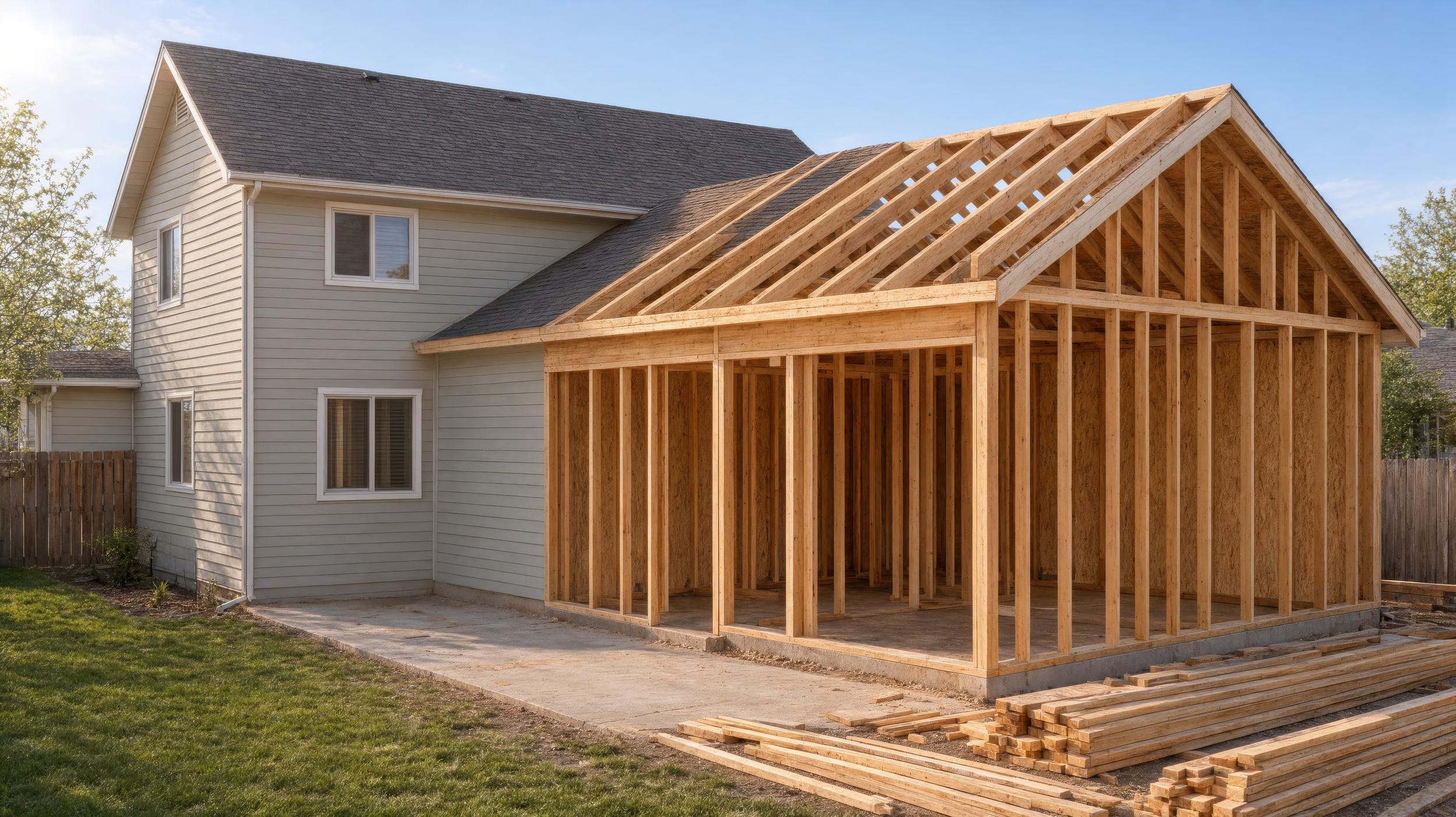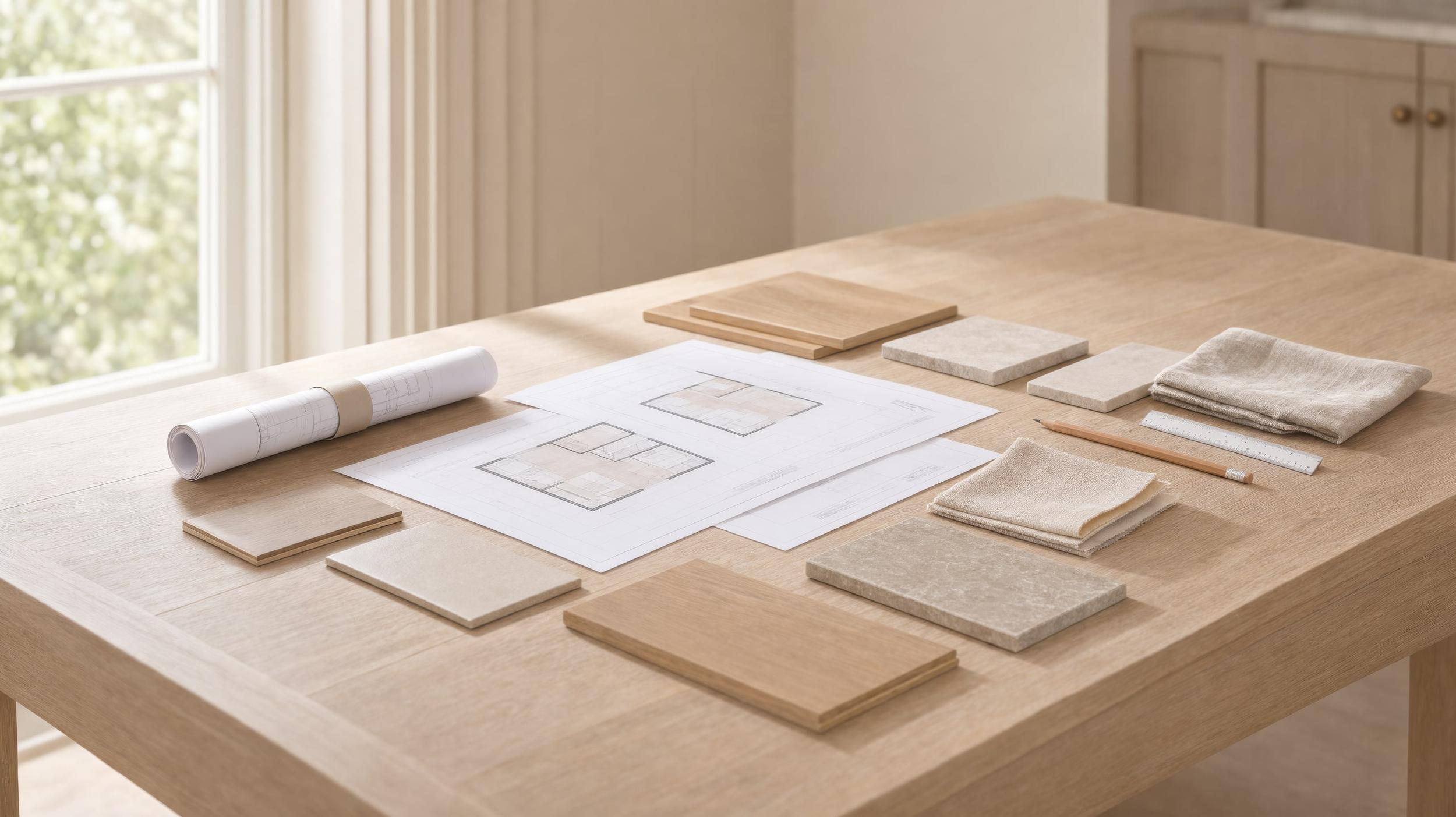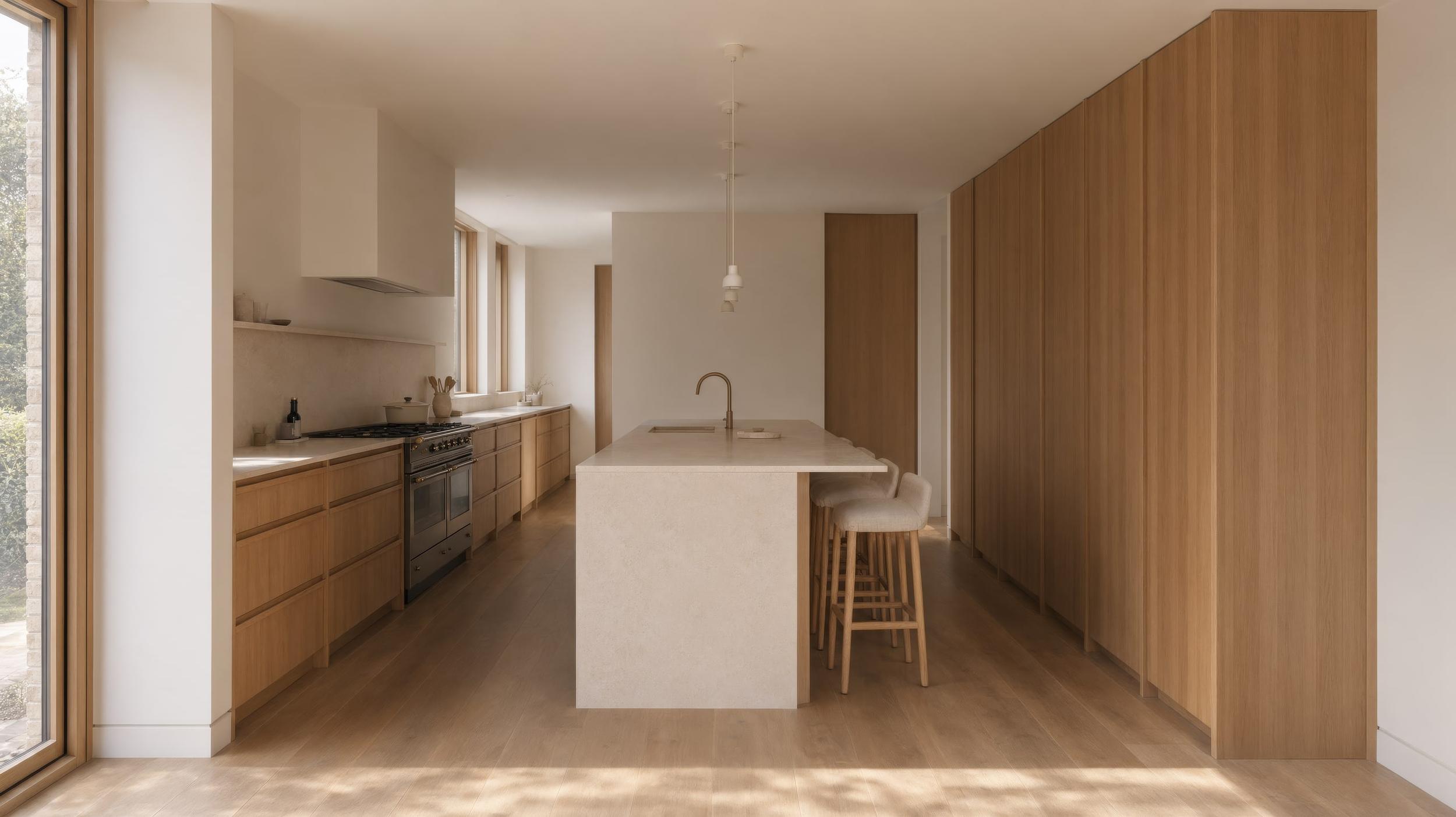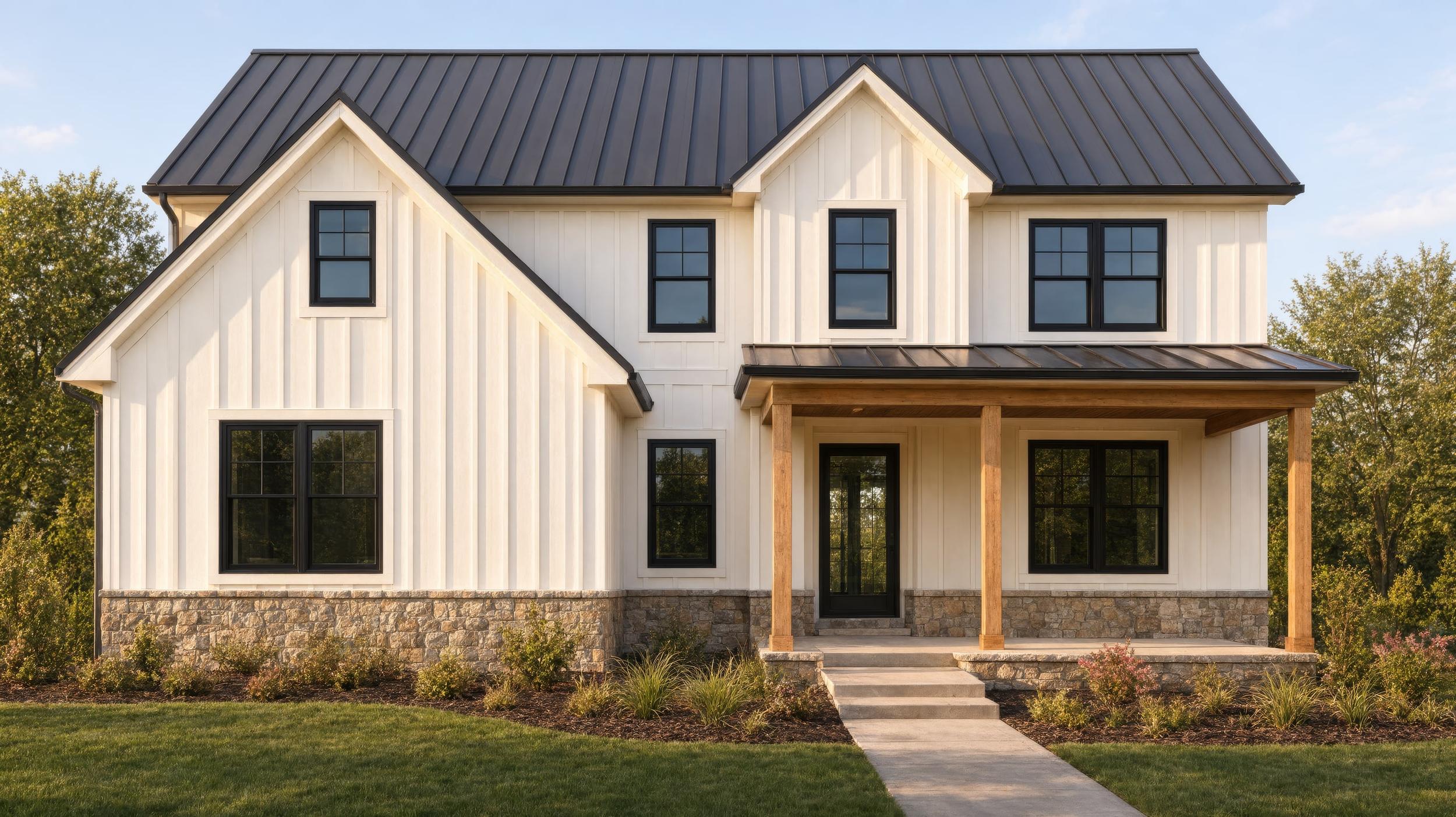
The outside of a house is the only part of it everyone sees. Neighbors, visitors, buyers and you, every time you pull into the driveway. An exterior makeover can change how a whole street reads a house, and because siding, stone, windows and roofing are bought by the square foot and installed by crews, it is also one of the most expensive places to make a mistake.
Most exterior regrets come from the same source: a decision made from a small sample, judged in a store or held up against a wall for a minute. This guide covers how to choose well, in the order that works.
Start from the shape, not the color
Before choosing a single color, look at the form of the house. Where is the main mass? Which part should feel heavy and grounded, and which light? Where is the entry, and does it read as the entry from the street?
A good exterior scheme reinforces the shape. A darker or heavier material on the base and a lighter one above makes a house feel anchored. A change of material at a projecting bay or a second-story addition can make an awkward volume look intentional. A single material wrapped over everything can make a modern house look crisp and an older one look flat. Decide what each part of the house should do, then choose the materials and colors that do it.
Body, trim, accent, roof and windows
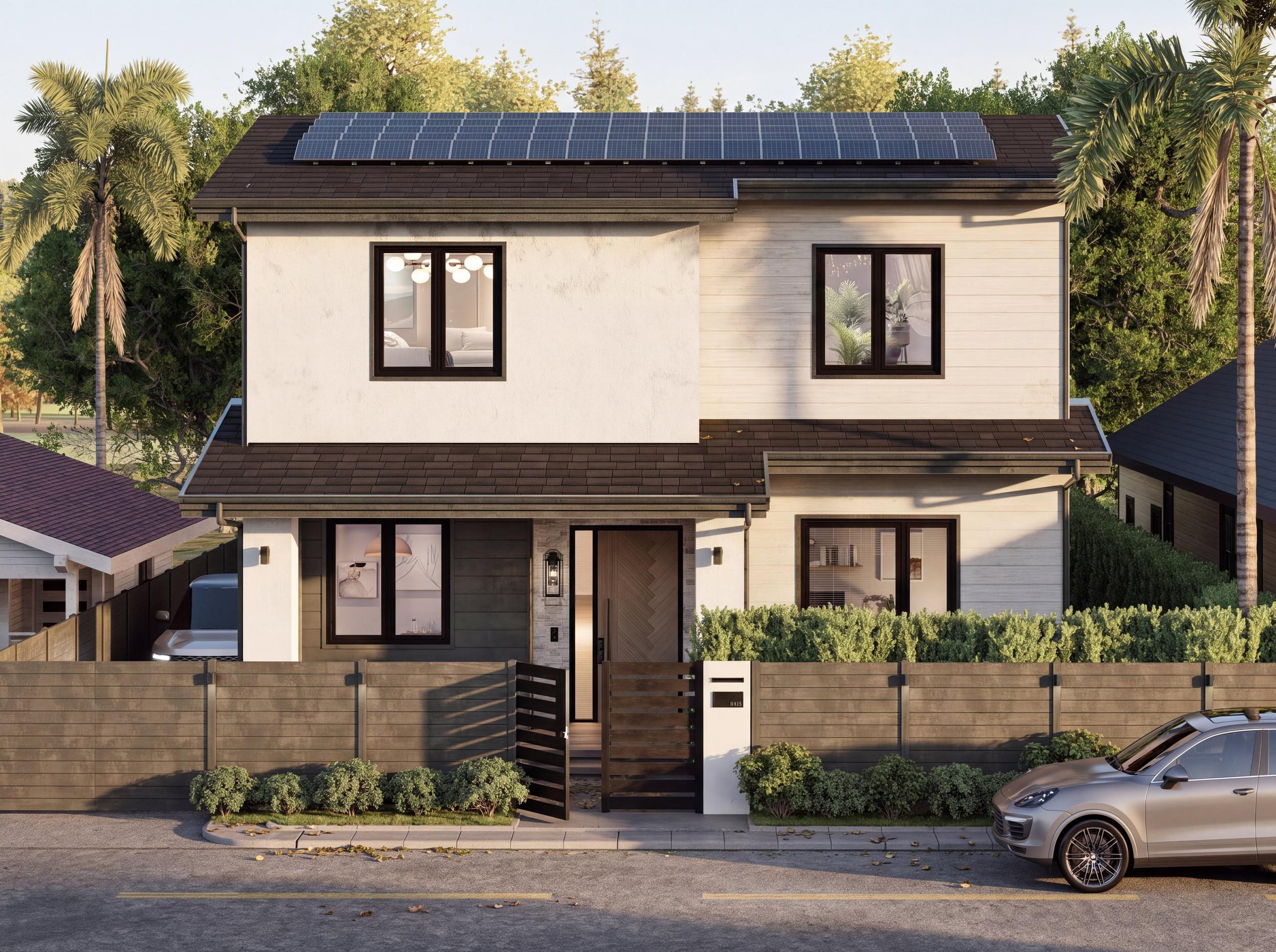
An exterior palette has more parts than people expect, and they all have to agree:
- Body: the main wall color or material, the largest area by far.
- Trim: fascia, corners, window and door casings.
- Accent: the front door, shutters, a feature wall or a garage door.
- Roof: often fixed, or chosen for decades, so the rest should work with it.
- Windows: frame color is now one of the strongest design decisions on a facade.
- Hardscape: the driveway, path and steps, which read as part of the house from the street.
Color looks different outdoors. Paint usually reads lighter and brighter in full daylight than on a chip indoors, and it shifts between a north-facing wall in shade and a south-facing one in sun. Test large samples on more than one side of the house and look at them at different times of day before you decide.
Materials
Fiber cement and engineered siding give the look of painted wood with less maintenance, in lap, board-and-batten and panel profiles.
Wood brings warmth, especially in vertical or horizontal cladding left natural or stained, and needs a maintenance plan.
Brick gives permanence and texture; painting or limewashing existing brick is one of the most dramatic changes you can make, and one of the hardest to reverse.
Stone works best where it looks structural: a base, a chimney, a whole wing. A thin band of stone veneer applied as decoration rarely convinces.
Stucco suits Mediterranean, Spanish and many modern houses, with color mixed into the finish.
Two or three materials are usually enough. More than that and the house starts to look like a sample board.
Windows and doors
Window frames have become the defining detail of many exteriors. Black or dark bronze frames sharpen a facade and suit modern farmhouse, contemporary and many traditional houses; white frames feel softer and more classic. Whatever you choose, keep frame colors consistent across the house, and think about the proportions of new or replaced windows, which matter more than their color.
The front door deserves the most attention per square foot of anything on the house. A generous door, good light either side, a house number you can read from the street and a path that leads clearly to it make the entry obvious and welcoming.
Entry, lighting and planting
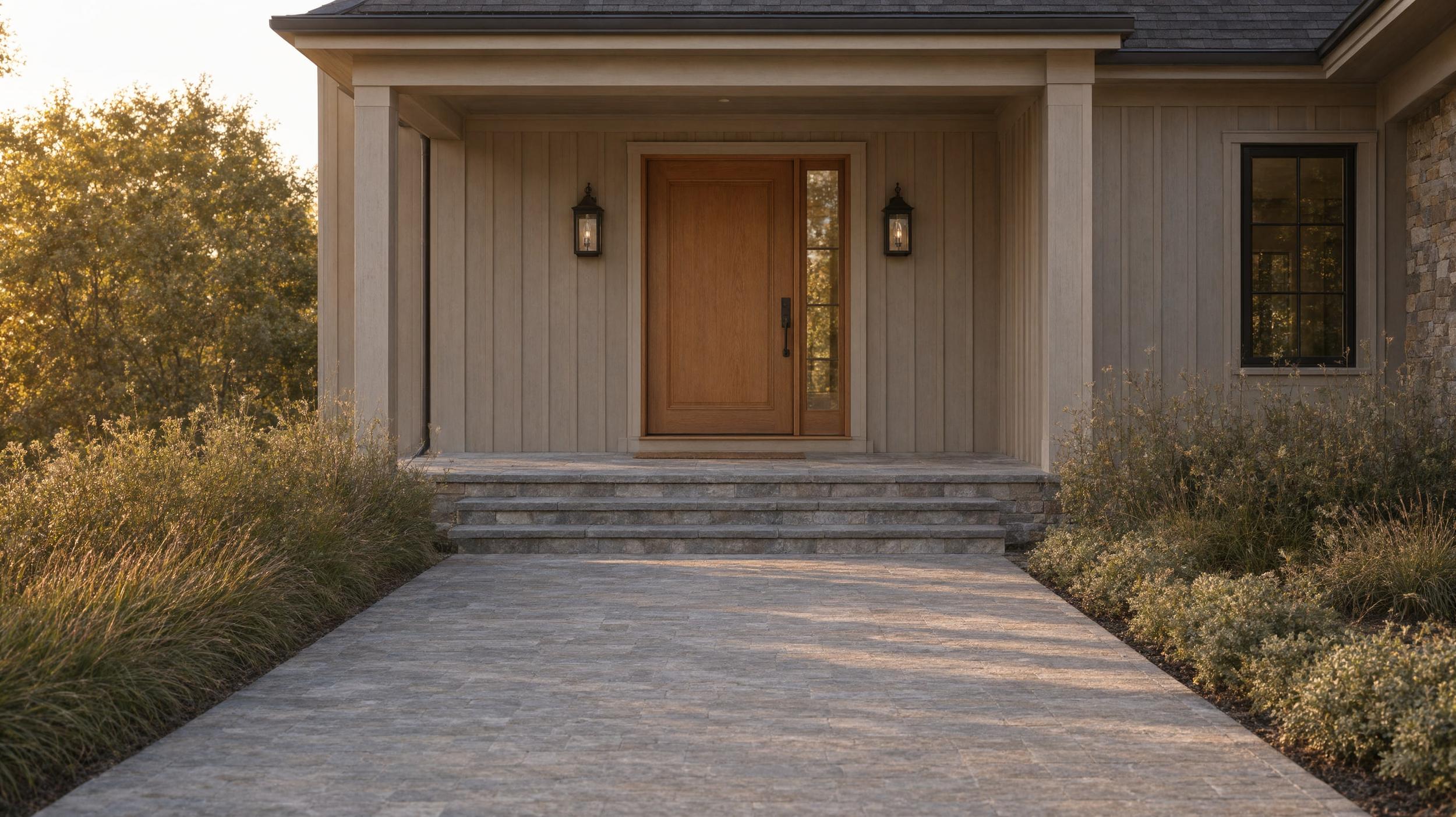
The finishing layer is what turns a re-clad house into a finished home. Exterior lighting that washes walls rather than glaring at the street. Planting that softens the base of the house and frames the entry. A driveway and path in materials that relate to the house. These are often left to the end of the budget, and they are what people notice first.
See it in daylight and at dusk
An exterior has two lives: daylight, when the materials and colors read, and dusk, when the lighting and the windows take over. Judge your scheme in both.
You may have tried an AI exterior visualizer app. They are useful for exploring a mood, but they redraw your house each time and guess at the dimensions, so a window or roofline can quietly change between images. A photorealistic render built from your measurements and photos shows your own house, at its real proportions, in your chosen materials, in daylight and at dusk. It is also what an HOA design review board, and your neighbors, understand best.
We render exteriors for homeowners across the US, from a single facade to a whole property with landscaping. Exteriors take 21 to 30 days. If the project includes the backyard, see our guide to outdoor kitchens and pool houses, and if you started with an AI image, see turning an AI design into a buildable plan.
Frequently asked questions
How do I choose an exterior color for my house?
Start from the shape of the house and the parts that cannot change, such as the roof and any stone or brick. Choose a body color, a trim color and one accent, test large samples on more than one side of the house, and look at them in morning and evening light.
Can I see my house with new siding before I commit?
Yes. A photorealistic render built from your measurements and photos shows your own house with the new siding, colors, windows and lighting, in daylight and at dusk.
What colors go with black windows?
Black frames work with white and off-white, warm grays, natural wood, brick and limewash, and deep colors like charcoal or dark green for a tonal look. Keep the trim consistent so the frames read as a deliberate choice.
Do AI exterior visualizers work?
They are good for exploring a mood quickly, but they redraw the house each time and guess at its dimensions, so they are not reliable for decisions. A render built from your house's real measurements shows what will actually be built.