Ask any homeowner what they would change after a renovation and you will hear the same stories. The tile that looked warm in the showroom and grey at home. The dark cabinets that made the kitchen feel smaller. The wood floor that clashed with the stairs. Finishes are some of the most visible decisions in a home and some of the hardest to judge in advance.
Here is why finishes so often disappoint, and how to choose them with confidence.
Why samples lie
The light is different
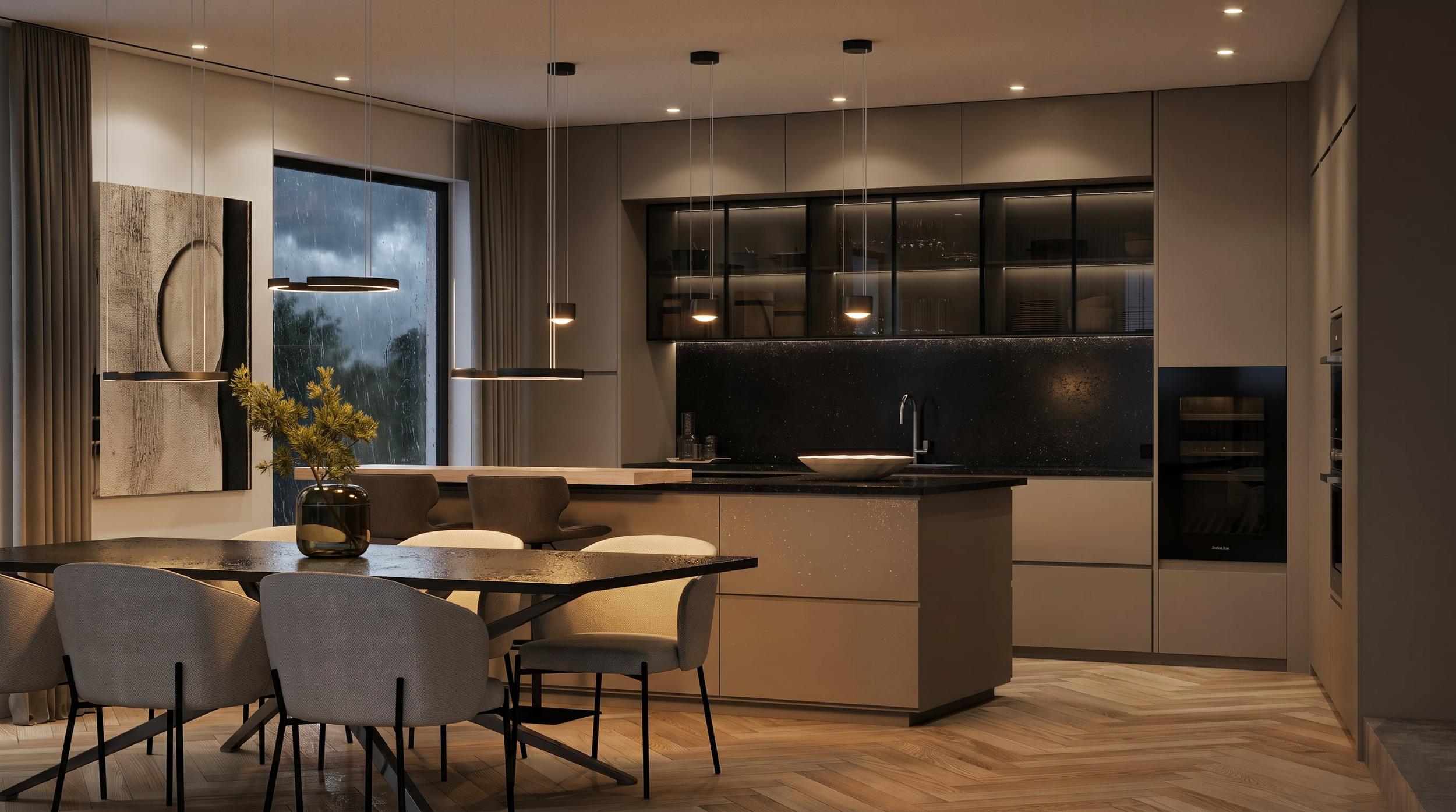
Showrooms are lit with bright, even, often cool light. Your home has daylight from one or two directions that changes through the day, plus warm evening lighting. The same white can look crisp in the morning and yellow at night, and a north-facing room in London or Boston will make a grey look far colder than the showroom did. Our article on light bulb color temperature explains how much your bulbs alone change a room.
The scale is wrong
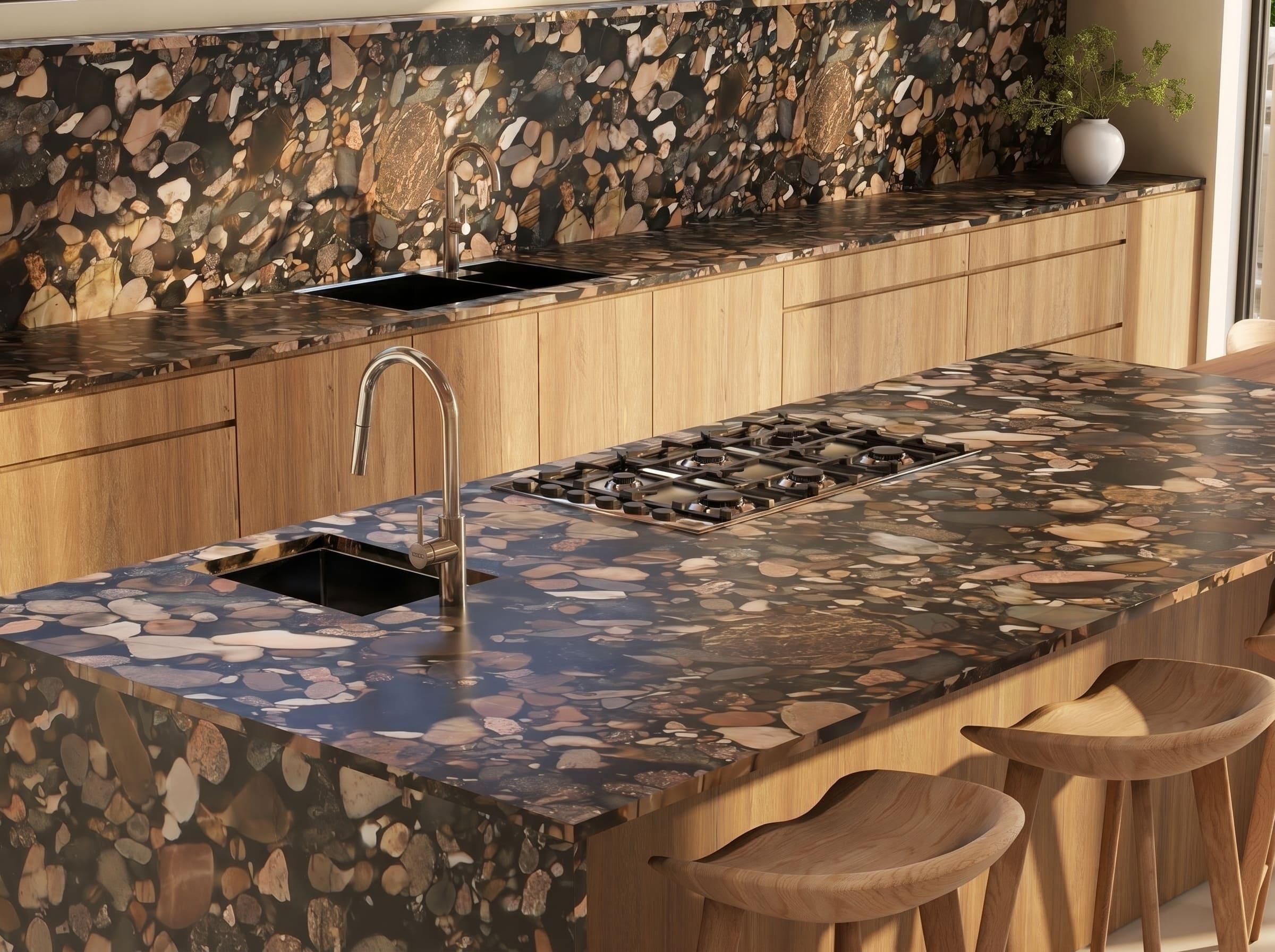
A 4-inch tile sample or a 10-centimeter stone chip tells you very little about a whole wall or a 10-foot island. Strong veining that looks dramatic on a small piece can feel busy across a whole surface. A subtle pattern can disappear completely.
They are seen alone
Finishes are almost never seen alone. The countertop sits against the cabinets, which sit against the floor, which runs into the next room. A combination that works on a mood board can fight in real life, especially with wood tones. Our guide to mixing wood tones covers that problem in detail.
A better way to test finishes
1. Narrow down early
Pick a direction before you visit showrooms: warm or cool, light or dark, matte or polished, quiet or bold. It stops the endless sample collecting.
2. Test the big surfaces first
Floors, cabinets, countertops and walls make up most of what you see. Decide those before small accents like hardware or a backsplash.
3. Look at samples at home, in the right place
Put samples where they will be installed, vertically for walls and horizontally for floors, and look at them in the morning, mid-afternoon and evening under your own bulbs.
4. Paint large swatches
Paint at least a 2-by-2-foot (or 60-by-60-centimeter) patch, or use large sample boards you can move around the room.
5. Ask for bigger pieces of stone
For natural stone, visit the stone yard and look at the actual slab, or ask for photos of the full slab, because veining varies from slab to slab.

See the whole room before you order
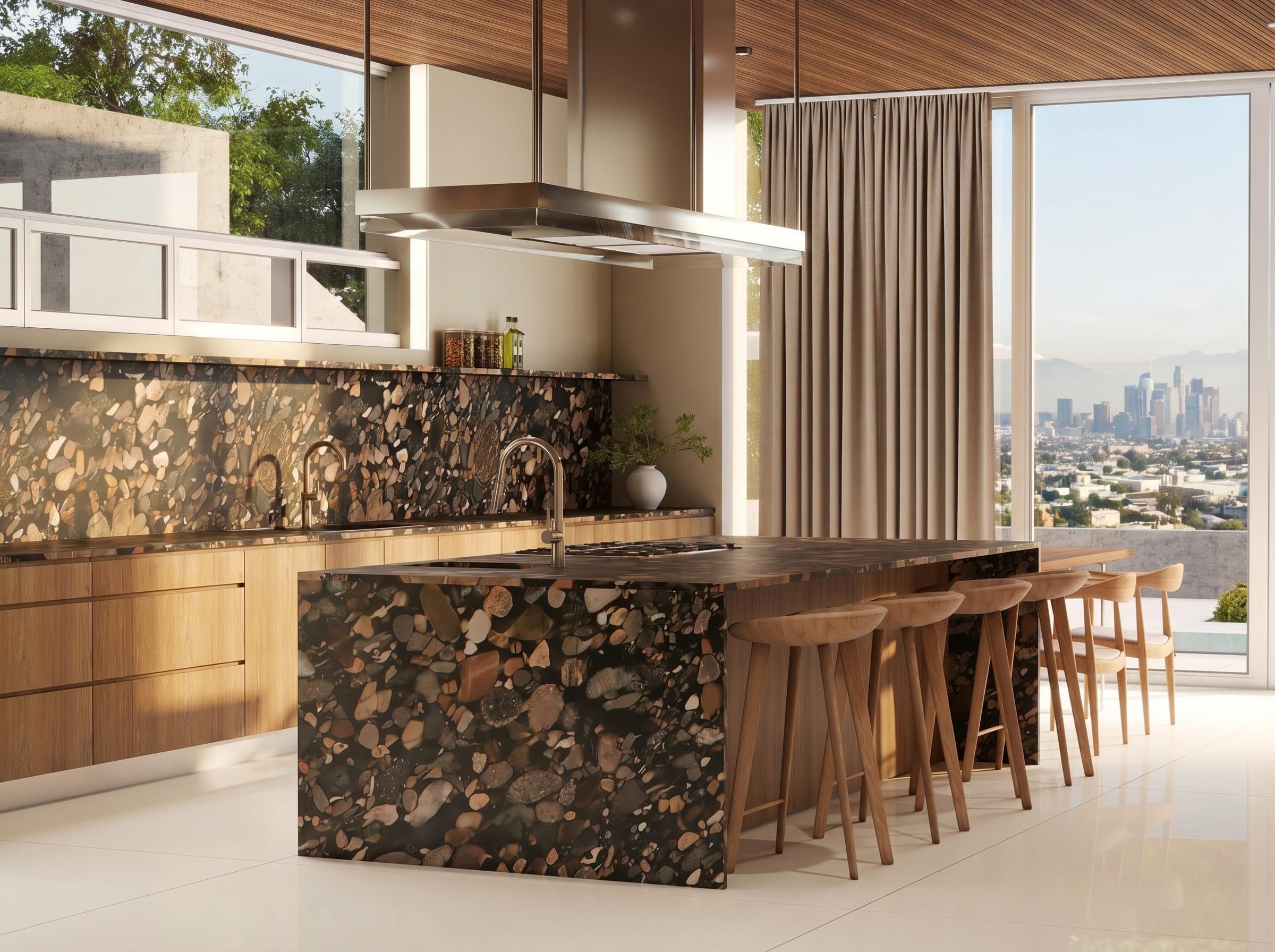
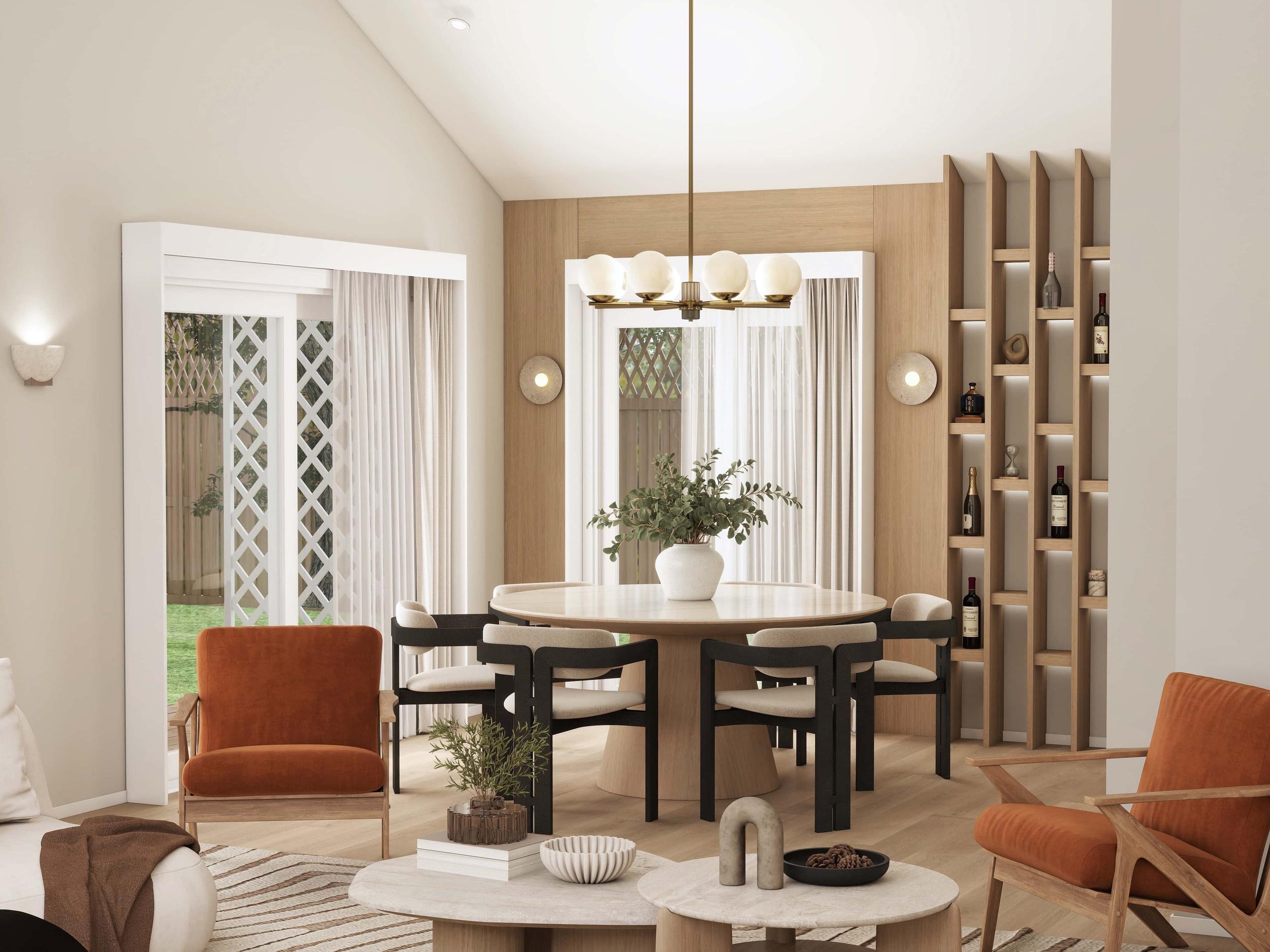
Even with every sample at home, you are still assembling the room in your head. A photorealistic rendering does the assembling for you: your actual room, at full scale, with the floor, cabinets, countertops, tile and paint together, in daylight from your real windows and with your evening lighting.
It is also the easiest way to compare options. Two countertops, three cabinet colors, a light floor versus a dark one: each variation is a revision, not a regret. At Studio 5 the design and renders for a room start at $449 (£349 in the UK), with two revision rounds included, and a shopping list with links to every product is available from $239 (£189) per room, so what you approve is what you buy.

A quick checklist before you order
- Have you seen every major finish together, not just individually?
- Have you seen them in your room's real light, morning and evening?
- Do the wood tones work together across rooms that connect?
- Do you have the exact product codes, sizes and finishes written down?
- Have you allowed extra tile and flooring for cuts and future repairs (often 10 percent or more)?
Finishes by room: where testing matters most
Kitchen. The countertop, cabinet color and floor make up most of what you see, and the countertop is the hardest to change. Test the stone against the actual cabinet sample, under your own light, and look at the full slab.
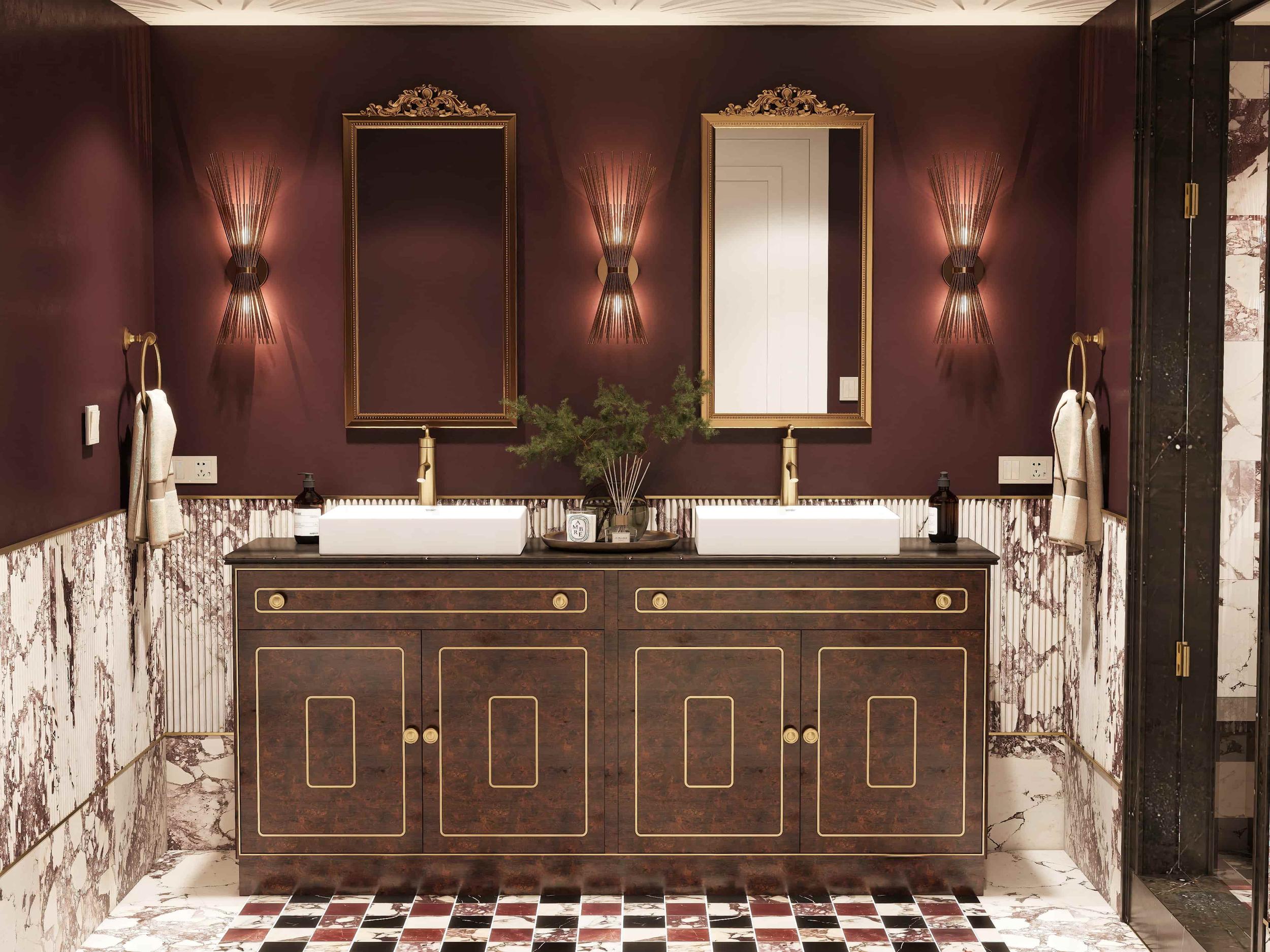
Bathroom. Tile covers most surfaces, often in a room with little or no daylight. Test tiles under the exact bulbs you plan to use. Dark or strongly patterned tile can make a small bathroom feel smaller, and grout color changes the look of a tile more than people expect.
Flooring. The floor usually runs through several rooms and meets the stairs, the kitchen and the doors. Check it against every wood and stone it will touch, including existing floors you are keeping.
Paint. The cheapest finish to change, but it affects how every other finish reads. Choose it last, once the fixed finishes are set.
Hardware and fixtures. Faucets, handles and light fittings are small but repeated everywhere. Decide on one or two metal finishes for the whole home and stick to them.
The cost of getting it wrong
Replacing paint is a weekend. Replacing tile means removing it, often damaging what is underneath, and paying for labor twice. Replacing a stone countertop means a new slab, new templating and new installation. The more expensive and permanent the finish, the more it is worth seeing it in place before you buy.
Durable choices are usually the beautiful ones
The finishes that age well are rarely the most fashionable. Natural materials with some variation, such as oak, stone and handmade tile, tend to look better as they wear, while very glossy or very uniform surfaces show every mark. In family kitchens and bathrooms, matte and honed finishes forgive fingerprints and water spots. In busy hallways and mudrooms, darker, textured floors hide grit between cleans. Choosing for how a room will be used, not only how it will look on day one, is the surest way to avoid regret.
Frequently asked questions
Why do tiles look different at home than in the showroom?
Showroom lighting is bright and even, while your home has changing daylight and warmer evening light. Tile is also seen at a much larger scale and next to other finishes at home.
How can I see finishes together before buying?
Bring large samples home and view them together in place at different times of day, or get a photorealistic rendering of the room with your chosen finishes.
How much extra tile should I order?
Commonly 10 percent or more for cuts and breakages, and more for complex patterns or diagonal layouts. Keep a few spare tiles for future repairs.
Can a rendering show the exact materials I am considering?
Yes. We model your room with finishes as close as possible to the real products you are considering, and can show alternatives side by side across revision rounds.
Choosing finishes for a kitchen, bathroom or whole home? See our services, look at the material palettes in The United Colors of Tim and Saffron & Stone, or send us a short brief and we will reply within 24 hours.